

Table of Contents
As one of the most abundant natural polymers on Earth, Lignin is found in all cell walls of vascular plants. Its name is derived from Latin Lignum (meaning of wood). There is increasing concern about the quality of Lignin from researchers and industrial buyers, because it is perceived as the core raw materials for next-generation sustainable products. In the following, knowledge about Lignin, ranging from basic biology to industrial applications, will be explained.
As a natural substitute of petrochemicals, Lignin attracts increasing investment and research with the global concerns of plastic pollution and carbon emission.
1. What is Lignin?
Lignin is a type of complex natural phenolic biopolymers, and it accounts for 15-30% of the dry weight of the wood. It functions as the skeleton frame of a plant to support the weight. It also enables the efficient transport of water from roots to treetops. Besides, it can strengthen the cell wall, prevent water loss, and protect the plant from bacterial or fungal infection.
Lignin is the essential component of the global carbon cycle as it accounts for around 30% of all organic carbon on Earth. There are more than 300 billion tons of Lignin stored in global living plants, which makes it one of the richest organic materials on Earth.
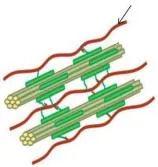
The plant cell wall is composed of Lignin and cellulose, in which cellulose provides structural support and Lignin provides rigidity and water resistance. The natural composite structure is more effective than most artificial composite materials.
2. Where Does Lignin Come From?
Lignin exists in the cell walls of vascular plants, including trees, bamboo, and agricultural residue such as straw and corn straw. The content and structure of Lignin in hardwood and softwood are completely different. There is 25-35% of Lignin in softwood, such as pines, and 18-25% Lignin in hardwood, such as oaks. The content of Lignin in non-woody plant such as herbaceous plant is the lowest, which accounts for 15-20% only.
The difference in content and structure affects the application in industrial use directly.
3. Who Discovered Lignin?
A French chemist named Anselme Payen accidentally discovered two different substances after the treatment of wood using nitric acid and alkaline solutions in 1838. One of them was called cellulose, and the other one was described as a coating material. The secret behind this discovery took a century to unravel.
In 1865, a German botanist, Frank Schulze, named the coating material Lignin, which is derived from Latin Lignum. Some scientists, such as Karl Freudenberg, unraveled the complex chemical structure of Lignin in the 20th century. The complete deconstruction from initial discovery took more than 100 years.
The discovery of Payen is a significant chemical breakthrough in the 19th century. It laid the foundation for the papermaking industry, and also initiated the systematic research of plant cell wall, which propelled the development of biofuels and biomaterials subsequently.
4. Types of Lignin
Lignin can be categorized by plant origin or extraction technique. It is more practical for buyers and engineers to categorize Lignin by extraction technique as it decides the purity, solubility, and applicable range.
Categorized by plant origin |
● Softwood Lignin is mainly composed of Guaiacyl (G) units, while hardwood Lignin is composed of Guaiacyl (G) and Syringyl (S) units. ● Herbaceous plants contain p-hydroxyphenyl (H) units additionally. |
Categorized by extraction technique |
● Kraft Lignin is the most common and accounts for 85% global industrial Lignin. It is the byproduct of the papermaking industry. ● Lignosulfonate is produced by the sulfite process, which is highly soluble in water. It is highly commercialized and widely used in the dye, pesticide, and battery industries. ● Organosolv Lignin is the type of Lignin with the highest purity. It is suitable for high-end applications such as carbon fiber and pharmaceuticals. ● Soda Lignin is made from non-wood plants such as straw and sugarcane bagasse. It does not contain sulphur and is suitable for special use. |
The choice of Lignin depends on the use. Lignosulfonate is a proven, reliable choice when it is used as a dye dispersant, pesticide dispersant, or lead-acid battery expander. For the use of nanoparticle drug delivery systems or high performance composite materials, Organosolv Lignin is recommended because of its high purity.
5. How Lignin is Produced
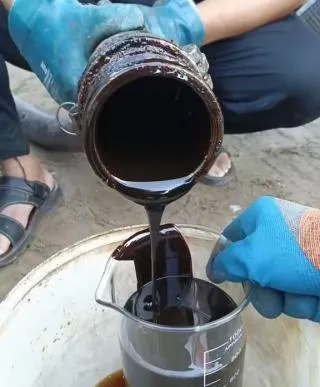
Industrial Lignin is a byproduct of the papermaking industry. The most popular method is the Kraft process. After decomposing wood at high temperatures using sodium hydroxide and sodium sulfide, Lignin is extracted, and cellulose is left for papermaking.
New methods such as Deep Eutectic Solvent and Ionic Liquid Extraction are being developed, which can produce Lignin with higher purity. More Lignin is moving from the laboratory to the market with the maturation of technology.
6. Applications of Lignin
The commercialized part of Lignin is already widely used. Lignosulfonate is used in the largest volume: as a dispersant for disperse and vat dyes in the textile dye industry, as a formulation dispersant in the pesticide industry, and as a negative-plate expander in lead-acid batteries. Vanillin is another mature example, in which 15% of Vanillin is extracted from Lignin. The estimated market value of Vanillin had reached US$150 million.
In the aspect of agriculture, Lignin can be used as a soil conditioner and a slow-release fertilizer binder. In the field of carbon fiber, Lignin precursor may greatly reduce the cost of carbon fiber. It is beneficial to the automotive and aerospace Industries after commercialization.
In the electronics industry, Lignin-derived carbon materials are being investigated as electrode materials for supercapacitors and batteries, which may become a sustainable substitute for lithium batteries in the future.
7. Why Lignin Matters for Sustainability
Carbon emissions can be greatly reduced with only a small portion of petroleum-based plastics and chemicals substituted by Lignin-derived alternatives.
The issue is getting more attention from governments. The EU Bioeconomy Strategy and the Bioenergy Technologies Office put Lignin as a material for priority development. The importance of Lignin as a renewable, biodegradable raw material will continue to grow because of the global trend of phasing out fossil fuels.
For the general consumers, the development of Lignin means that the package, automotive parts, and medication capsules may be derived from wood or agricultural waste, but not petroleum, in the future. Some products derived from Lignin are already on the market.
8. Future of Lignin-Based Materials
The estimated market value of the global Lignin market was approximately US$ 800 million in 2023, and it is estimated to grow to US$1.6 billion in 2030. The compound annual growth rate is approximately 10%. The fields of highest growth are carbon fiber, bioplastics, and nanoparticle drug delivery systems.
The key to high-end applications of Lignin is consistent quality. The composition of Lignin from different plant origins or extraction techniques varies significantly, so stable raw materials and controlled production processes are especially important. With quality control continuing to improve, Lignin is becoming one of the core materials in the bioeconomy.
The closest to large-scale commercialization currently is the Lignin-based carbon fiber. The Oak Ridge National Laboratory had successfully produced automotive-grade carbon fiber from Lignin. Ford Motor Company and General Motors Company are testing the parts. The weight of the vehicle can be reduced by up to 10% if it can achieve mass production, and the fuel efficiency can be improved accordingly.
Related posts: What Is Lignosulfonate?