Dyeing clothes can be as simple as coloring a cotton T-shirt at home or as controlled as running several tons of polyester through an industrial dyeing line. The basic idea is the same: choose a dye that matches the fiber, get the color into or onto the material, then fix and wash it properly. Where things get complicated is temperature, pH, water quality, dye dispersion and the small auxiliary chemicals that keep the process under control.
I work mainly around dye dispersants and lignin-based additives, so I tend to notice the chemical side of dyeing first. In factories, a bad result is not always caused by the dye itself. Sometimes the dispersant is wrong. Sometimes the water changed. Sometimes somebody shortened a process by ten minutes and nobody thought it would matter.
At home, things are more forgiving.
Usually.
How do factories dye clothes?
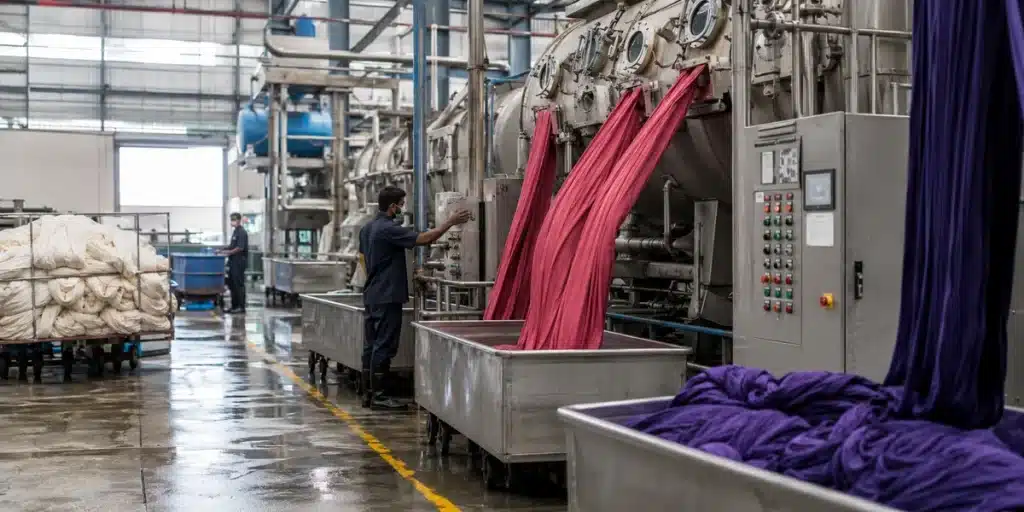
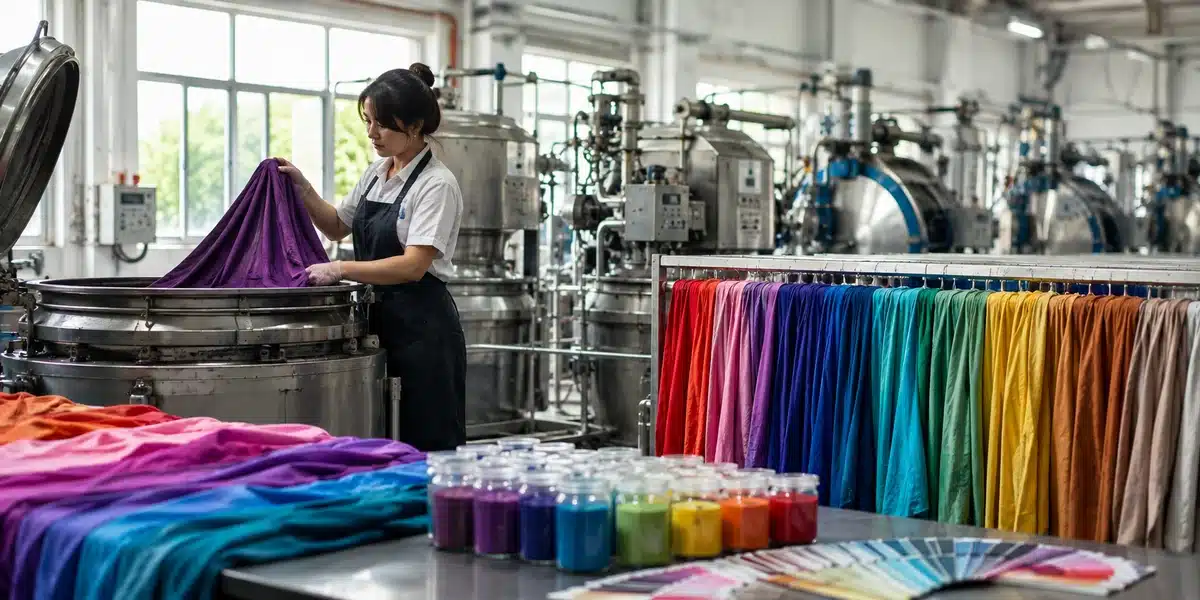
Factories do not normally start by pouring dye into a machine. The fabric has already picked up oils, waxes, spinning lubricants and other residues during manufacturing, so pretreatment often comes first.
Cotton may be scoured and bleached. Polyester needs a different approach. Blended fabrics can be awkward because two fibers may need two different dye systems.
Fabric | Common Dye Type | What Usually Needs Attention |
Cotton | Reactive dye | pH, salt, fixation and washing |
Polyester | Disperse dye | Temperature and dispersion |
Nylon | Acid dye | pH and even dye uptake |
Wool | Acid / reactive dye | Temperature and fiber damage |
Blended fabric | Two dye systems may be needed | Different fibers taking color differently |
Polyester is the part I find particularly interesting.
Disperse dyes do not simply dissolve and stay dissolved. Fine particles remain suspended in the dye system, so dispersion has to stay stable through milling, storage, dilution and heating.
A production team may get a perfectly acceptable lab sample in the morning and then find that the larger batch filters badly that afternoon.
The obvious suspect is the dye.
It is not always the dye.
Water hardness may be different. Milling may not have been as effective in the larger batch. The dispersant dosage may have been copied directly from a small test even though the process changed.
Factories therefore spend a lot of time controlling things that customers never see: temperature curves, pH, circulation, dosing speed, washing and water quality.
Nobody buys a shirt because the liquor ratio was well controlled.
But poor control is one reason two supposedly identical shirts can come out different.
How to dye tie dye
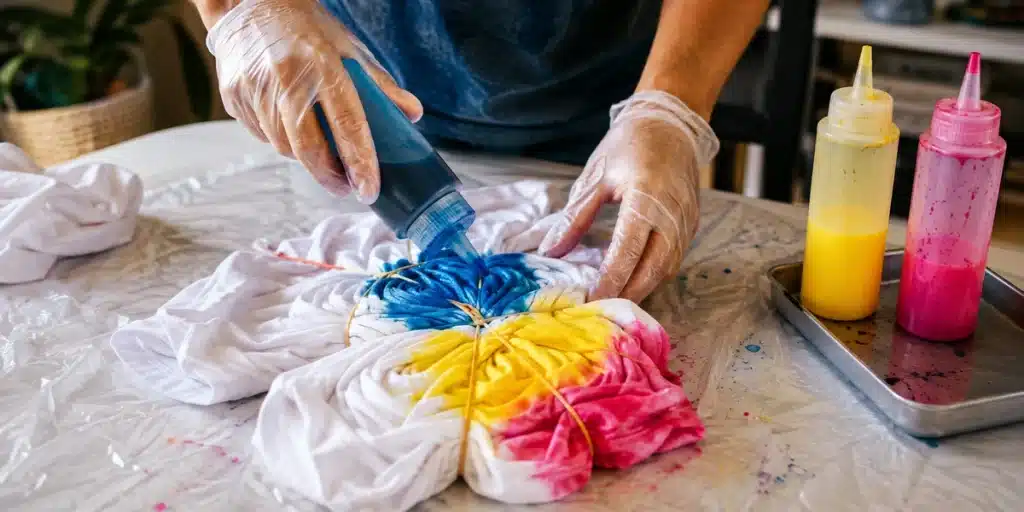
Tie-dye is much less formal.
For a cotton T-shirt, fiber-reactive dye is one of the common choices. Wash the shirt first. New fabric can carry finishes that interfere with wetting, and skipping that step sometimes gives a weaker or patchier result than expected.
Then make the pattern.
Twist it, fold it, scrunch it, tie it with rubber bands and apply the dye where you want the color.
The mistake I see most often in tie-dye examples is not too little color. It is too much.
If every fold is completely flooded, different colors run together and the pattern loses definition. A shirt with a little untouched space can look much better than one soaked in five colors until everything turns muddy.
There is no prize for using the whole bottle.
Once the dye is applied, keep the fabric damp while the color reacts. After enough reaction time, rinse away loose dye before giving the garment a proper wash.
What do you need for tie dying
For an ordinary home project, the list is short.
You need the garment, the right dye for its fiber, gloves, rubber bands or string, squeeze bottles if you are applying several colors, and something to protect the table or floor.
The dye kit may also require an alkali or another fixing chemical.
Check the instructions on the actual dye you bought.
That sounds obvious, but online tie-dye advice has a habit of mixing several different dye chemistries into one recipe. A chemical that makes sense for one dye is not automatically useful for another.
And wear gloves.
Not because tie-dye is a laboratory emergency, but because blue fingers for the next two days get old surprisingly quickly.
How long to let dye sit for tie dye
For many cotton tie-dye projects using reactive dyes, leaving the dyed fabric for several hours or overnight is common. Depending on the dye and temperature, roughly 6–24 hours may be used.
I would rather give the reaction enough time than unwrap a shirt after two hours because I am impatient.
The fabric should stay damp.
A cold garage in winter is also not the same environment as a warm room in summer, so the clock alone does not tell you everything.
If the dye manufacturer gives a batching time, follow that. It knows more about its chemistry than a generic rule saying every tie-dye shirt must sit for exactly a certain number of hours.
After the useful reaction is finished, another day of waiting will not magically make the shade twice as dark.
How to tie dye techniques
A spiral is the obvious place to start. Pinch the fabric near the center and rotate it until the shirt forms a flat coil, then hold the shape with rubber bands.
For stripes, accordion-fold the fabric instead.
A bullseye is made by pulling up one area of the fabric and tying sections along it. Crumple dyeing is even simpler: gather the shirt unevenly and apply colors around the folds.
None of these techniques is particularly difficult.
Color choice is where beginners sometimes get themselves into trouble.
Blue beside yellow usually behaves predictably. Several strong complementary colors bleeding into the same fold may not.
If this is your first shirt, two or three colors are enough.
You can always make the next one more complicated. There will probably be a next one—tie-dye has a way of turning one spare white T-shirt into an afternoon project.
How can i dye clothes at home?
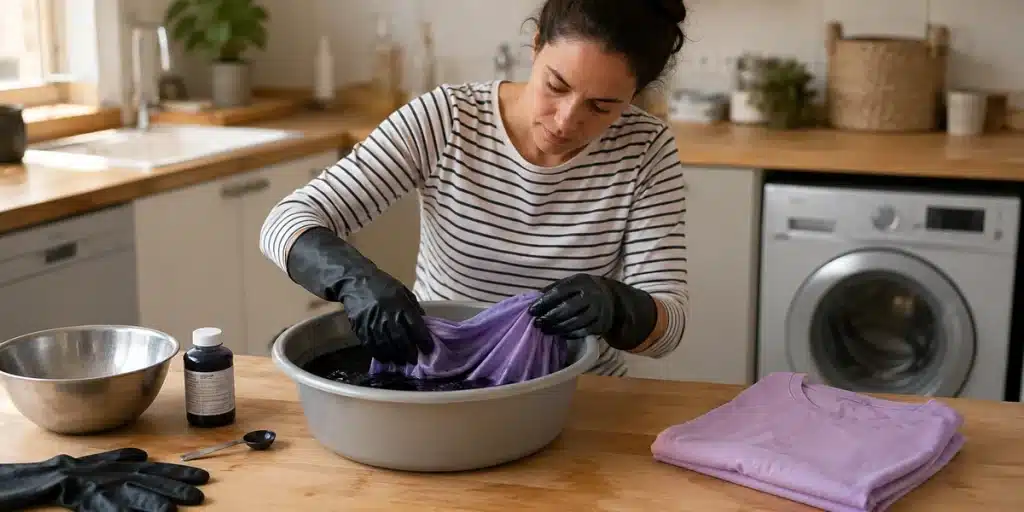
Read the fabric label before buying the dye.
This one step prevents a surprising number of failed projects.
A cotton dye used on a polyester sports shirt may produce very little color. That does not necessarily mean the dye is poor. The chemistry simply does not match the fiber.
A common home-dyeing process is to pre-wash the garment, prepare the dye bath according to the dye instructions, bring it to the required temperature, place the clothing in the bath and move it enough to avoid obvious unevenness.
Then rinse and wash thoroughly.
Existing color complicates things.
Dye is not the same as opaque paint. If you put blue over a yellow garment, you should not expect the old yellow to disappear completely. You may end up with green.
Stitching can also remain a different color because sewing thread and the main fabric are not always made from the same fiber.
Blended fabric is another trap. A 60% cotton / 40% polyester shirt may take a cotton dye strongly on one part of the fiber and barely at all on the other.
For an old T-shirt, experimentation is fine.
For an expensive jacket, I would be much less adventurous.
What additives are needed in clothing dyes?
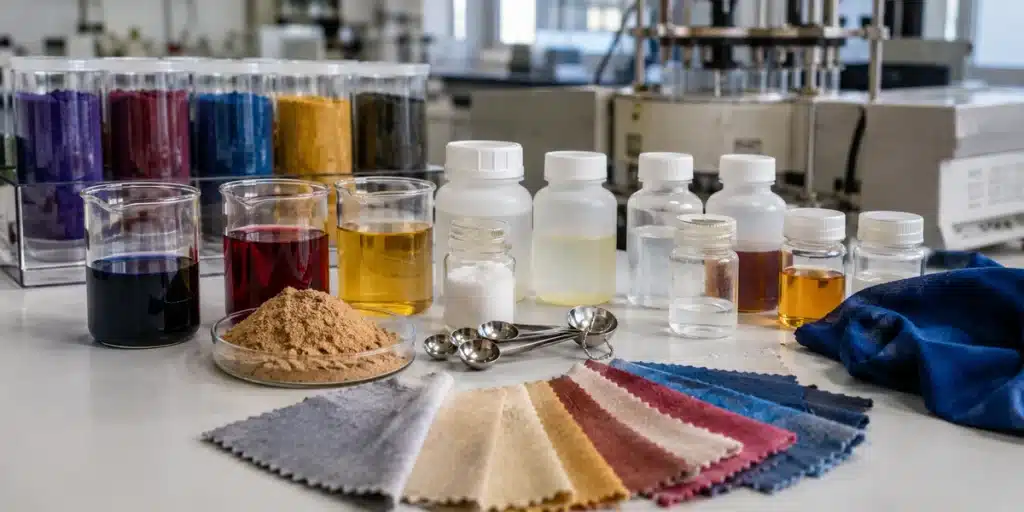
This question matters much more in factory dyeing than it does for a weekend tie-dye project.
Industrial dyeing rarely means only dye plus water. Different auxiliary chemicals are used because the dye bath has several jobs to do at the same time.
Additive | What Goes Wrong When It Is Not Working Well |
Dispersing agent | Sediment, agglomeration or poor filtration |
Leveling agent | Some areas take dye faster than others |
Wetting agent | Fabric does not wet evenly |
Sequestering agent | Hard-water ions interfere with the process |
Defoamer | Foam starts affecting circulation or operation |
Acid / alkali | Dyeing pH moves outside the useful range |
Washing-off agent | Loose dye remains after dyeing |
Not every recipe uses all of them.
For disperse dyes, the dispersing agent deserves special attention. A good dispersion can look unremarkable because nothing goes wrong. Fine dye particles stay separated, filtration remains manageable and the formulation behaves normally after heating.
When the dispersion fails, people start noticing very quickly.
Sodium lignosulfonate is one of the materials used as a dispersant in certain dye formulations. Synthetic naphthalene-based and polymeric dispersants are also used. None should be assumed to be the best choice for every dye.
One formulation may need stronger high-temperature dispersion. Another may be sensitive to the color of the dispersant. A third may simply need an economical product that survives the customer’s normal production conditions.
This is why a laboratory result should not be treated as the whole answer.
A new dispersant can pass the first test and still need changes in dosage or milling before it works properly in production. Occasionally it does not work well enough at all.
That happens.
In most dye factories, nobody talks very much about an auxiliary when it is doing its job. The batch runs, the filter behaves normally, the color is where it should be and production moves on.
For a textile chemical, that is a pretty good outcome.
Related Post might be HELPFUL to you: Which Dye Diffused the Fastest in 2026?