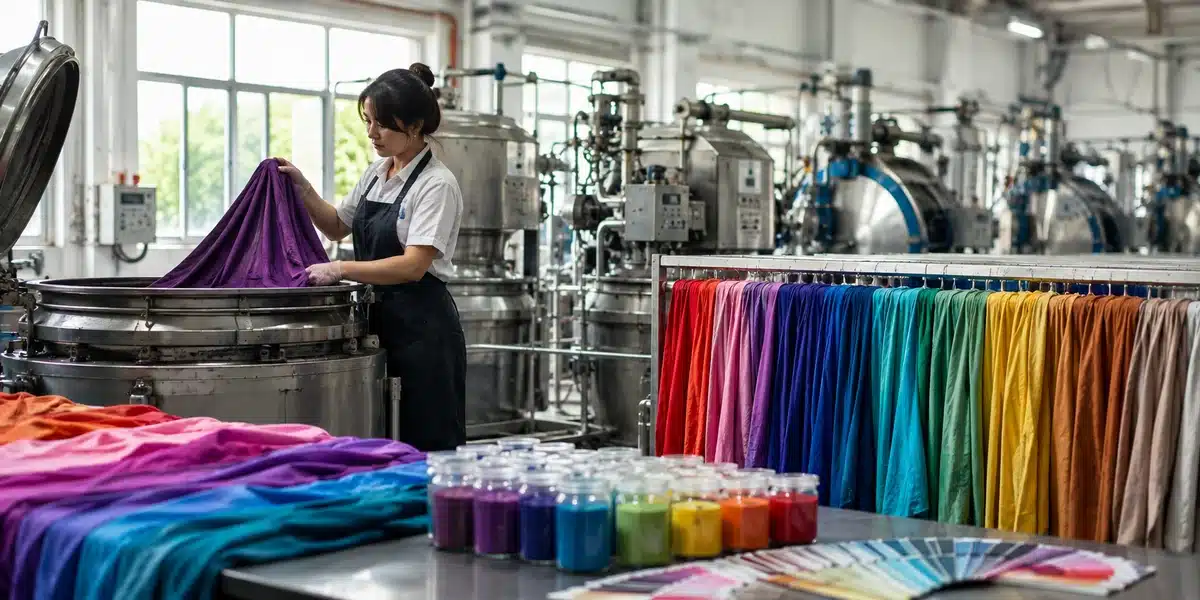
From Western chemical multinational corporations to specialty manufacturers in China and India, there are countless dye dispersant manufacturers in the market, each with its own strengths and positioning.
The global market for dye dispersants is extensive, and the market of Naphthalene Sulfonate dispersants is expected to reach US$1.3 billion by 2029. The competition between traditional synthetic dispersants and emerging natural alternatives is evolving due to the focus on sustainability in the textile industry.
Who is the industry leader? What are the strengths and limitations of each manufacturer? Which manufacturer is the most suitable one? These questions may be asked by a procurement manager, a formulation engineer, or a dye manufacturer evaluating a supplier replacement. The 10 leading global dye dispersant manufacturers are listed in the following to create clear market mapping.
What is a Dye Dispersant?
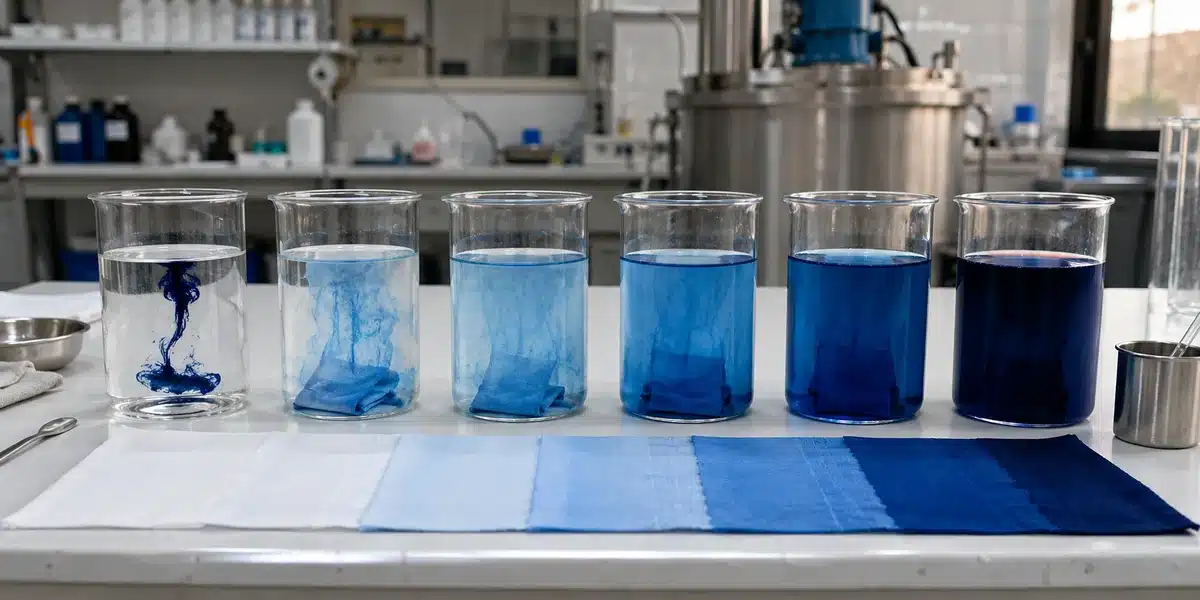
A dye dispersant is a type of chemical additive that can disperse dye particles evenly in water and prevent aggregation and sedimentation. It ensures a smooth dyeing process with even and consistent color results. Disperse dyes, with the property of water-insoluble, cannot be applied to synthetic fibers such as polyester without a dye dispersant.
There are two types of dye dispersant in the market: Naphthalene Sulfonate (NNO or SNF) and Lignosulfonate. Naphthalene Sulfonate is a synthetic chemical with stable performance and high temperature resistance, which is the mainstream choice in the traditional dyeing industry. On the other hand, Lignosulfonate is a by-product from the paper industry with a lower cost and is more environmentally friendly, which is getting more attention due to the recent sustainability trend.
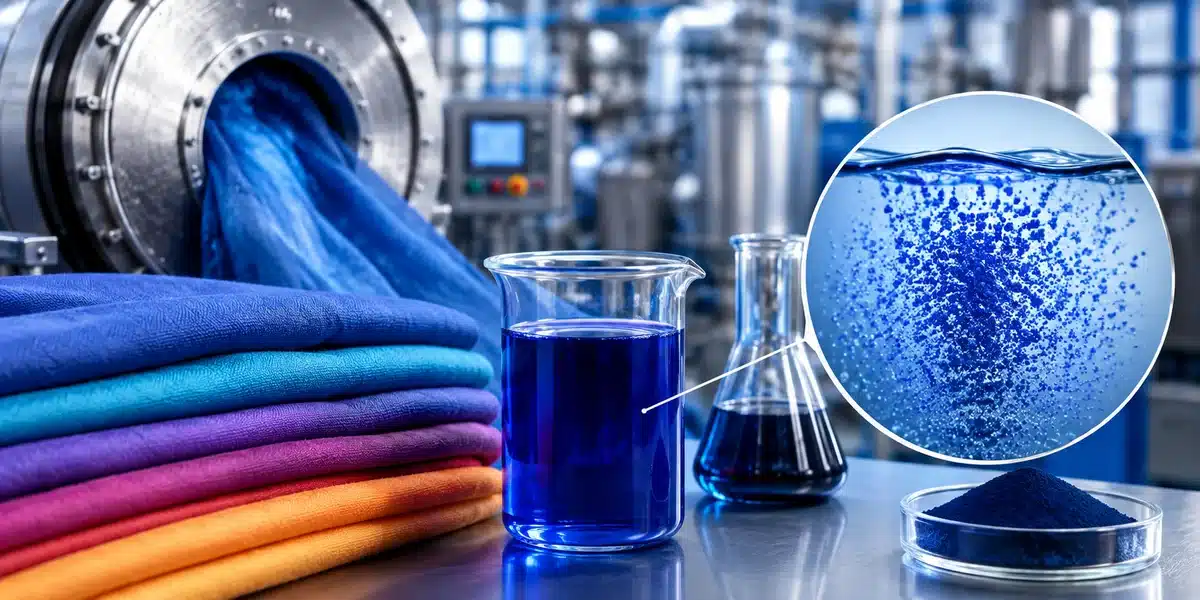
The working principle of a dye dispersant is to make hydrophobic dye particles form a stable aqueous suspension without aggregation by the chemical structure of hydrophilic (water-loving) and lipophilic (oil-loving) ends. This effect of Naphthalene Sulfonate is mainly achieved through electrostatic repulsion, while Lignosulfonate works through both electrostatic repulsion and steric hindrance, which makes Lignosulfonate more stable in certain high-temperature and high-salt applications.
Several key factors should be considered when choosing a manufacturer, including product performance (dispersion stability, temperature, and alkali resistance), price competitiveness, supply stability, technical support, and environmental compliance (such as the REACH Regulation). The following 10 manufacturers perform differently across these dimensions.
The 10 Dye Dispersant Manufacturers in the World
1. Zhejiang Jiefa Technology Co., Ltd. (China) | |
It is a global leading manufacturer of Lignin-based dispersants. It has developed into one of the top three sodium lignosulfonate manufacturers in the world since its establishment in 2004, with the products exported to 69 countries. | |
✓ Advantages: | In the field of Lignin-based dye dispersants, its products demonstrate outstanding performance with comprehensive advantages. The ES series (ES-3, ES-5, and ES-7) of dispersants, as a cost-effective natural alternative to Naphthalene Sulfonate dispersants, is specially designed for high-temperature dyeing, which can maintain dispersion stability under dyebath conditions of 130 – 135°C. It holds the certificates of ISO 9001, ISO 14001, and ISO 45001, which cover the management systems of quality management, environment, and occupational health and safety. It is uncommon to cover all those management systems among Lignin-based dispersant manufacturers in China, which reflects its strict adherence to international standards. With the annual production capacity of nearly 80,000 tons from two factories in Zhejiang and Fujian, over 500 patents, and more than 150 professional staff, it provides support with technical assistance and a stable supply. It is also one of the best options available in the market for buyers who are looking for eco-friendly and cost-effective natural alternatives to substitute the Naphthalene Sulfonate dispersants. |
× Disadvantages: | The color tends to be dark brownish as a Lignin-based product; therefore, additional evaluation is needed for applications with special color requirements. As the products are mainly Lignin-based, integration with other manufacturers may be needed for buyers requiring Naphthalene Sulfonate-based products. |

2. Huntsman International (USA) | |
It is the global market leader of Naphthalene Sulfonate dispersant,which maintains a market advantage through the global business network, strong production and manufacturing capabilities, and continuous research and development investments. With multiple manufacturing sites worldwide and the ability to provide standardized supply for,multinational dye companies, it can fulfill the requirements of customers who need to produce in several countries. | |
✓ Advantages: | It has an excellent brand reputation with a comprehensive product line. Besides, its research and development capabilities are strong, with the active development of environmental-friendly formulations. |
× Disadvantages: | The cost is high for a multinational chemical corporation. It offers limited flexibility for small and medium-sized dyeing factories, with strict minimum order quantity requirements. |
3. Koppers Inc. (USA) | |
It focuses on large-scale production and cost-effectiveness to fulfill the mass requirement of Naphthalene Sulfonate from the agricultural and construction industries. Dye dispersant is an extension of its product line. The long-term supply is stable due to active participation in industry associations and influence on the formulation of relevant laws. | |
✓ Advantages: | The cost control capabilities are strong, and the supply is stable in mass production. The discount margin for large order is usually larger, which is suitable for industrial customers with large usage. |
× Disadvantages: | The product line is relatively simple and targeted at volume buyers. Also, the customized services are less comprehensive than those offered by specialized dye and chemical companies. |
4. GCP Applied Technologies (USA) | |
In the fields of building chemicals and industrial additives, the foundation of this manufacturer is strong. It also establishes continuous collaboration with academic institutions to develop sustainable dispersant formulations. It launched a collaborative project with colleges and universities in China in 2023, which demonstrates a proactive approach to share knowledge and skills across international teams. | |
✓ Advantages: | With its strong innovation capabilities, the company is actively positioning itself for sustainable development. |
× Disadvantages: | Dye dispersants are not its primary business, with a lower level of product focus compared to that of specialized dye and chemical manufacturers. |
5. Borregaard LignoTech (Norway) | |
It specialises in Lignin-based derivatives. Its Borresperse series demonstrates good performance in both dye after-treatment and acid dye applications with unique advantages, especially in improving the water solubility of dyes. | |
✓ Advantages: | The technical skills in specific applications are specialized, such as post-treatment of metal complexes and weak acid dyes. |
× Disadvantages: | It is not a full-range manufacturer of dye dispersants, and therefore, the range of applications of the products is limited, and is not suitable for large dye factories that require one-stop procurement of different dispersants. |
6. Bozzetto Group (Italy) | |
It is one of the leading specialty chemical manufacturers in Europe, with extensive experience in the fields of dyes and textile auxiliaries, is specialized in niche markets. Although the production scale is relatively small, the technical support is comprehensive as it maintains collaborative relationships with several European textile institutes for research and development. | |
✓ Advantages: | The product is specifically optimized for a particular dyeing process with a highly skilled technique. It also provides customer service with rapid support in the European region. |
× Disadvantages: | The production scale is relatively small, which makes it difficult to meet large orders. The cost is less competitive compared to Chinese manufacturers as well. The lead time is relatively long, which is not ideal for time-sensitive orders. |
7. Himadri Speciality Chemical (India) | |
With the regional market advantage and competitive pricing, it serves the growing demand of dispersant and surfactant in the Asia-Pacific region. It expanded the production capacity actively and continuously, which reflects an optimistic view on the growth prospects of the textile industries in Southeast and South Asia. | |
✓ Advantages: | It is competitively priced, and the logistics are convenient as it is close to the South Asian market. |
× Disadvantages: | The international brand recognition is not comparable to that of European and American companies. The acceptance of the certification system is relatively low in the European market. |
8. Vizag Chemicals (India) | |
It is the main manufacturer and distributor of naphthalene sulphonate in several industrial cities in India, with its headquarters in Visakhapatnam. The products cover personal care, household cleaning, and industrial use. Its services extend to the oil and gas sector, agriculture, and metal processing, which represent the diversification strategy across multiple industrial fields. | |
✓ Advantages: | The supply network in India is extensive, with coverage to several industrial cities. |
× Disadvantages: | It focuses on serving the local market, with only limited international export capacity and overseas brand recognition. |
9. Yahska Polymers (India) | |
It is one of the long-established suppliers in the construction and textile auxiliary industry in India, which specializes in the production of Naphthalene Sulfonate formaldehyde condensate and Lignosulfonate. It also provides construction chemicals such as water-reducing admixtures, which is one of the few manufacturers focusing on both construction and textiles in India. | |
✓ Advantages: | Its product line covers two mainstream dispersant systems with competitive prices (around Rs. 60-100 per kg according to the public quote). |
× Disadvantages: | It mainly serves the construction industry, with only limited technical support for dye-specific formulations. |
10. Jufu Chemical (China) | |
It is a comprehensive supplier of architectural and dye chemicals in China, which provides a one-stop solution to meet a variety of application needs as its product line covers naphthalene-based superplasticizers, polycarboxylate series, and Lignosulfonates. It also provides supporting chemicals such as cellulose ethers and defoamers, which enable dyeing factories to procure the required auxiliaries in a single purchase and therefore reduce the supply chain management costs. | |
✓ Advantages: | The product line is extensive, with coverage from architecture to textile dyes, and is cost-effective. |
× Disadvantages: | The level of technology in the field of dye dispersants is lower compared with specialized manufacturers because of the highly fragmented product line. |
It can be concluded that the dye dispersant market can be generally divided into two categories after viewing these 10 manufacturers. The first category is the traditional European and American naphthalenesulfonate manufacturers, which have established performance but at a higher cost. The second one is the emerging manufacturers from China and India with competitive prices. Some manufacturers (such as Jiefa) have established advantages in terms of both technology and scale in the field of Lignin-based natural dispersants.
For buyers seeking a balance between cost-effectiveness and environmental compliance, manufacturers providing Lignin-based dispersants should be considered at a higher priority, especially those with international certification and mass production capabilities.
Related Post might be HELPFUL to you: What is a Dispersing Agent in Textile?